Suursaari 1944

Suursaari 1944
I want to know about the operation when the germans tried to capture the important island of Suursaari in Finnish Gulf of Baltic Sea at autumn of 1944 (from the finns).

Re: Suursaari 1944
PPoS wrote:I want to know about the operation when the germans tried to capture the important island of Suursaari in Finnish Gulf of Baltic Sea at autumn of 1944 (from the finns).
German military named this operation "Tanne Ost" and the battle happened 14th of September 1944. Suursaari Island is nowadays known with its Russian name "Gogland". It is the biggest island in the eastern part of Finnish Gulf. During Continuation War (1941 - 1944) it had important role in guarding minefields of sea-mines blocking Finnish Gulf from Soviet warships (mines made it dangerous and difficult for Soviet submarines to get into Baltic Sea and Finnish coastal artillery placed in Suursaari Island made it impossible for Soviets to use minesweepers to clear the minefields). At 1944 Finns had RTR 12 (Rannikkotykistörykmentti = Coastal artillery regiment 12) and some other smaller units at Suursaari. The island itself had been quite well fortified during the war years, but the the Finns had transported lot of the heavy weaponry to mainland just before the attack as part of preparations for the Finnish-Soviet peace agreement (Which gave the island to the Soviets. Finnish military didn't want to give them the weapons in the island so they had to be transported off before giving it to Soviets).
Luckily for them the Finnish troops in the island still had some heavy weapons like:
- 2 x 122mm field gun (122 K 31 aka A-19) (one of them already removed from its position)
- 9 x 120mm mortar
- battery of 75mm (75 K 17) field guns
- some 40mm Bofors and 75mm AA-guns
- 45-mm at-guns
- machineguns
The Germans had their their closest base in somewhat smaller nearby (south-west from Suursaari) Tytärsaari Island while Soviets had their closest base in somewhat farther Lavansaari Island (eastwards from Suursaari). The Germans also had a radar station with its crew and liaison officer in Suursaari. The Germans called the operation "Tanne Ost" and gathered their troops for the operation together in Tallinn (Estonia). Before the operation German liaison officer had reported to his own superiors that the Finns would not resist taking the island, this proved to be a colossal mistake. It is not known if Commander of Suusaari (Ltn-Col Miettinen) had actually given any promises, but just before the attack (13th of September) he had received orders from Finnish High Command not to give Suursaari to the Germans at any case and use weapons to keep them out if necessary.
German troops were commanded by Commodor Mecke, it seems that they had considered unlikely for Finns to fight as the troops sent to take the island had a very large amount of artillery- and AA-units among them compared to amount of infantry and engineers. They used all kinds of ships and boats to transport their troops (gun ferries, minesweepers, motor torpedo boats, engineer boats and even some landing crafts). The main landing point was Suurkylä harbour at north-east part of the island (all the larger vessels were heading there) and east beach north from it (engineer boats landed their troops in there along the beach). Landing was planned to be supported by two destroyers located west from the northern part of the island. The German plan was to use the evacuation of their personnel from their radar-station of Suursaari as an excuse for getting their ships to that harbour. Unfortunately for them the Finns were too helpful for that plan to work - when German radar-station personnel was ready to be evacuated to Tytärsaari base (they destroyed the radar station equipment before that) and the German boat, which should have arrived from Tytärsaari to collect them, had not arrived in time the Finns radioed a suggestion that they might transport the radar station crew to Tytärsaari with one of their boats. German commander of Tytärsaari answered by demanding that Germans will transport them with their own boat. This made the Finns suspicious and Finnish troops in the island were alarmed and commanded into their positions.
When first German minesweepers got to pier at Suursaari island all Finnish troops had waited battle-ready already several hours. When the first German vessels came the harbour the German commander Mecke landed from it and met Miettinen (the islands Finnish commander) in the harbour trying to get him giving the island to the Germans without battle, but Miettinen refused. After this German troops started to taking Finns at the harbour as prisoners and started shooting towards those who Finnish soldiers who resisted (Finns had two VMV patrol boats in harbour and Germans captured those in that point). Unluckily for Germans Miettinen managed to escape capture and get into his HQ. Finnish soldiers started returning fire, German ships getting to harbour started also shooting Finns and the whole battle begun. The German unit which was about to land the island had some 2,300 men, but German ships failed disembarking about 900 of them.
The Germans tried to advance from the beach but didn't get very far until Finns from their well fortified positions surrounded by barb-wire obstacles managed to stop them. German advance got pinned by fire. and Germans failed getting their heavy weapons to ground. Finnish 120mm mortars were bombardingthe harbour making it impossible for Germans to unload their heavy weapons from ships in there. At the same time the Germans had also failed getting any working radios into the island (the island is mountainous and covered by thick forests, so to direct fire successfully the Germans needed FO with radio to the island). Because the lack of FO with radio in island the German ships could not shoot inland targets in danger of hitting their own troops (especially the two destroyers were useless - they could not give any fire support). Finnish troops had no such problem - especially the 75mm field guns north from the harbour damaged several of the German ships and destroyed many smaller boats. Finnish 40-mm Bofors guns were also able to fire the harbour area from nearby high hill. The German advance got pinned by fire and the Finns made an counter attack which made the Germans retreat a bit. After both Finnish motor torpedo boats and Soviet planes (attack of Soviet planes was 100% Soviet idea. During battle Soviet Lavansaari commander asked by radio if the Finns would like any help and the Finns refused - telling that they didn't need any help) attacked the German ships.
When the German ships still failed getting any radio connection to their troops in the island they decided to leave. After German ships had left (the German troops in island still had no radio connection anywhere) and after founding out that the Finns would soon make another counter-attack Mecke decided that the battle was lost and surrendered with his remaining troops (about 1,200 men). On their way to Tallinn the remaining German ships were again attacked by Soviet planes, which yet increased German casualties.
German losses in this battle (losses in the island only, no idea about losses in German ships which left the Island):
- KIA: 155
- WIA: 175 (also counted as POW)
- POW: 1231
Finnish losses in this battle:
- KIA: 45
- WIA: 69
- POW: 7 (German ships took them with them when they left)
The whole battle happened in that one single day (14th of September 1944):
- The Germans started landing their troops around 01:00
- Soviet aircraft attacked the island twice (around 06:45 against harbour and German ships and around 10:40 against German and Finnish positions in the island)
- Germans surrendered around 18:45
- Siege-fire started 21:00
BTW: Most of the Soviet planes attacking the island attacked the harbour (it had several German vessels, most of them already damaged or destroyed by Finnish fire). These and other attacks of Soviet planes into Suursaari that day killed also several Finns (some POWs that Germans had taken + some attacks actually hit into Finnish positions instead of German ones). During the same way these Soviet aircraft also attacked against Finnish warships (luckily without causing any large damage) after which the Finns asked the Soviets to stop their air operations around the island.
Source: Original Finnish military reports of this battle. I read them through in Sota-arkisto (= Finnish Military Archives) long time ago and made some notes.
What every they call might be closer to "Högland", but I don't they they call it exactly that either as they don't have have "ö" (o with dots for those without scandic alphabet).JariL wrote:Hi JTV,
Suursaari is actually know today again with its Swedish name Högland. Russian name is just a translitteration of that name. Western H become G in Russian. For example Himmler is Gimmler, Hitler Gitler etc.
Regards,
jari

Anyway, this webpage has map of Suursaari/Högland/Gogland/Hogland/whatever:
http://www.luovutettukarjala.fi/pitajat ... enkart.htm
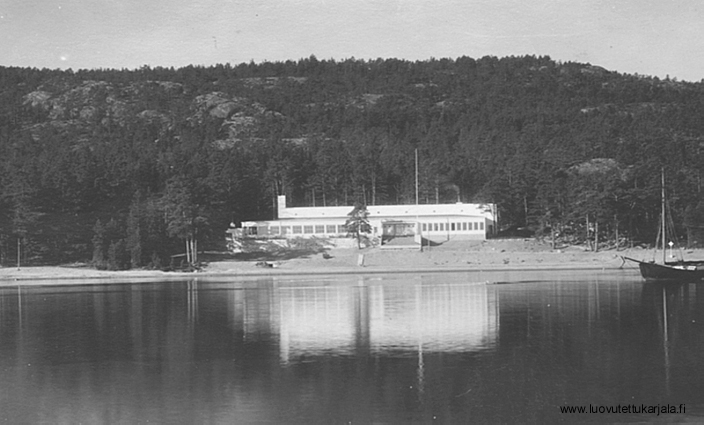
This photo from that same website gives some idea about the terrain in the island:
http://www.luovutettukarjala.fi/pitajat ... uur758.jpg
The harbour where the Germans landed was in Suurkylänlahti and their engineer boats tried landing to east coast north from it. Finnish 75-mm field guns were in Pohjoiskorkia. 40-mm Bofors guns in a very steep hill just south of Suurkylänlahti. The closest about Platoon-size fortified base (one Platoon of Torjuntakomppania/Coastal Defence Company per base) was just north of Suurkylänlahti and another one in Kappelniemi. Some additional infantry and mortar FO-team in Pohjoiskorkia. 75-mm (75 ItK/97-14 P) AA-guns located in a hill close to crossroads west from Suurkylänlahti. Finnish HQ was in Haukkavuori (and so were the mortars?). The whole island had been earlier divided to three bases (north, middle, south) and the battle happened in sector of the most north base, so additional units and reserves were transferred from other parts of the island during battle.
JTV, interesting reading. About the 120mm mortars, which seem to have been so effective in disrupting the unloading of German support weapons: Were these the same as the Soviet 120mm mortar (even captured examples?), or an indigenous Finnish model?
If there hadn't been targets in the harbour, would the defenders have attempted to use the mortars against enemy ships further out to sea - even, for example, in support of the 75mm/122mm weapons denying minesweepers freedom of operation? Or were the mortars intended strictly for when the battle came to the land?
Thanks, Zygmunt
Off-topic to Uncle Joe - the letters "G", "H", and "K" all seem to get switched around a lot, for example the Russian spelling of "Khrushchev" doesn't have a "K" at the beginning as it does when written in English, just the "H" (written in cyrillic as "X"). And then there's the way Finnish seems to write "General" as "Kenraali"...
If there hadn't been targets in the harbour, would the defenders have attempted to use the mortars against enemy ships further out to sea - even, for example, in support of the 75mm/122mm weapons denying minesweepers freedom of operation? Or were the mortars intended strictly for when the battle came to the land?
Thanks, Zygmunt
Off-topic to Uncle Joe - the letters "G", "H", and "K" all seem to get switched around a lot, for example the Russian spelling of "Khrushchev" doesn't have a "K" at the beginning as it does when written in English, just the "H" (written in cyrillic as "X"). And then there's the way Finnish seems to write "General" as "Kenraali"...
Hi,
The explanation is that the Russian H ( X-like letter in their alphabet) is much stronger and "comes from the throat" where as the "western" H is weak an d almost disappears when pronounced (listen forexample and Englisman pronouncing for example "path" or "horse"). Finnish H is some where in between. Finns usually cannot make a difference between a Russian "H" and Finnish "H". There were lengthy discussions between Finnish and Soviet authorities back in 1970's after which "Gelsinki" became "Xelsinki" in Russian newspapers etc.
Best regards,
Jari
The explanation is that the Russian H ( X-like letter in their alphabet) is much stronger and "comes from the throat" where as the "western" H is weak an d almost disappears when pronounced (listen forexample and Englisman pronouncing for example "path" or "horse"). Finnish H is some where in between. Finns usually cannot make a difference between a Russian "H" and Finnish "H". There were lengthy discussions between Finnish and Soviet authorities back in 1970's after which "Gelsinki" became "Xelsinki" in Russian newspapers etc.
Best regards,
Jari
Interesting for I have tested this with those Russian speakers by writing various Finnish and German words with H as cyrillic X and I couldn´t really make a difference between Heikki and Haritonov. And I don´t think "path" is the perfect example of pronouncing H in English. E.g. "helicopter", "homogenic", "howitzer" are better and I cannot detect any weakness in them:)JariL wrote:Hi,
The explanation is that the Russian H ( X-like letter in their alphabet) is much stronger and "comes from the throat" where as the "western" H is weak an d almost disappears when pronounced (listen forexample and Englisman pronouncing for example "path" or "horse"). Finnish H is some where in between. Finns usually cannot make a difference between a Russian "H" and Finnish "H". There were lengthy discussions between Finnish and Soviet authorities back in 1970's after which "Gelsinki" became "Xelsinki" in Russian newspapers etc.
Best regards,
Jari
Oops... My bad, it seems I did a typo and then copied it also to another place in my reply.Mikko H. wrote:JTV,
didn't the battle take place on 15 September 1944? I'm at work, so don't have any references with me, but a quick Google gives a number of pages which also give the 15th as the date.
 15th of September 1944 is correct date for the battle (I checked it from my notes and two books).
The heavy mortar company in question was armed with nine 120 Krh/40, which was designed and manufactured by Weapons Department of Tampella factory in Finland. Krh = kranaatinheitin = mortar (literally: grenade-thrower). Tampella had manufactured the prototype of this weapon already in 1936, but the first weapons were not delivered to Finnish Army until shortly after Winter War. Between 1940 - 1945 Tampella manufactured 351 (or 357 depending source) of these mortars, but 215 of them were sold to Sweden. In addition to this Sweden acquired production license for this weapon. Finnish Army captured about 200 Soviet 120-mm mortars m/38 and m/38-42, which were reissued to Finnish troops. From these two captured mortars the m/38 was much more common in Finnish use. Anyway, Finnish soldiers considered 120 Krh/40 much better heavy mortar then the Soviet ones.Zygmunt wrote:JTV, interesting reading. About the 120mm mortars, which seem to have been so effective in disrupting the unloading of German support weapons: Were these the same as the Soviet 120mm mortar (even captured examples?), or an indigenous Finnish model?
If there hadn't been targets in the harbour, would the defenders have attempted to use the mortars against enemy ships further out to sea - even, for example, in support of the 75mm/122mm weapons denying minesweepers freedom of operation? Or were the mortars intended strictly for when the battle came to the land?
The reports tell only about bombarding the harbout, they don't specify if the mortars fired in the ships also, but that would have been quite possible. The minesweepers, landing ferries and other German ships in the harbour were pretty much large stationary targets when the troops were disembarking from them. So firing on the ships while they were in the harbour was likely, but firing to German ships outside the harbour (not-so-stationary targets) less likely.
Bit of data about 120 Krh/40:
- Weight in action: 260 kg
- Weight during transport: 390 kg
- Barrel weight: 85 kg
- Tripod weight: 68 kg
- Base-plate weight: 100 kg
- Maximum range: 5.6 kg / 5.9 km (depending source) (*)
- Muzzle velocity: 116 - 290 m/sec
- Barrel length: 189 cm
- Rate of fire: Upto 20 shots/minute
(*) With the most usual mortar shell "120 tkr-10-32/41-35" used with this mortar during WW2. It weighted 12.5-kg and contained 2.2-kg of TNT.
Bit more information about Finnish troops in Suursaari during the battle. I found my original notes made in Finnish Military Archives and these are from them. Unlike I earlier wrote the island had indeed been divided not three but four sectors (bases). The land battles happened in northern section. These sectors were (from north to south):
- Pohjoislohko (north-section)
- Vuorilohko (mountain-section)
- Keskilohko (middle-section)
- Etelalohko (south-section)
The Finnish troops in the island were about 1,700 men strong. The Finnish troops in each section:
Pohjoislohko / North-section:
I/RTR 12 (1st Battalion/Coastal Artillery Regiment 12):
- Commander: Captain Arponen
- Manpower: 18 officers + 57 NCO + 265 men
- 10. TK (10th Coastal Defence Company)
- I/201. Kev.Ptri (1st Section/201st Light Artillery Battery)
- 24. Rask.It.Ptri (24th Heavy AA-Battery)
- 5. Kev.R.It.Ptri (5th Light Coastal AA-Battery)
- I/Rask.Krh.K (1st Platoon/Heavy mortar Company)
Vuorilohko / Mountain-section:
II/RTR 12 (2nd Battalion/Coastal Artillery Regiment 12):
- Commander: Major Sakajarvi
- Manpower: 21 officers + 79 NCO + 375 men
- EK/TRT 12 (HQ-Company/RTR 12
- J/9. Mot.Rask.Ptri (Section/9th Motorised Heavy Artillery Battery)
- II/Rask.Krh.K (2nd Platoon/Heavy Mortar Company)
- I/1. R.Pion.K (1st Platoon/1st Coastal Engineer Company)
- 8. TK (8th Coastal Defence Company)
Keskilohko / Middle-section:
RP 7 = Coastal (Infantry) Battalion 7
- Commander: Captain Laaksonen
- Manpower: 12 officers + 53 NCO + 230 men
- 7. TK (7th Coastal Defence Company)
- 9. TK (9th Coastal Defence Company) (reserves)
- 34. Rask.It.Ptri (34th Heavy AA-Battery)
- Koul.K = Training Company (reserves)
Etela-lohko / South-section:
III/RTR 12 (3rd Battalion/Coastal Artillery Regiment 12):
- Commander: Major Soini
- Manpower: 17 officers + 80 NCO + 321 men
- 2./RP 7 (2nd Company/Coastal Battalion 7)
- 3./RP 7 (3rd Company/Coastal Battalion 7) (reserves)
- III/Rask.Krh.K (3rd Platoon/Heavy Mortar Company)
- II/201. Kev.Ptri (2nd Section/201st Light Artillery Battery)
The heavy weapons of Finnish troops in Suursaari 15th of September 1944:
- 9. Mt.Rask.Ptri: 1 x 122 K/31 heavy field gun
- Rask.Krh.K: 9 x 122 Krh/40 mortar
- 24. Rask.It.Ptri: 5 x 75 mm AA-gun
- 34. Rask.It.Ptri: 4 x 75-mm or 76-mm AA-gun
- 5. Kev.R.It.Ptri: 6 x 40-mm Bofors AA-gun
- 201. Kev.Ptri: 4 x 75 K/17 field gun or 75-mm Canet L/50 coastal/naval-gun
- TK's: 47-mm Obuhov L/40 coastal/naval-guns, captured 45-mm AT-guns
Finnish troops taking part to counter-attack:
- 10. TK (10th Coastal Defence Company)
- Vahv. 3./RP 7 (Reinforced 3rd Co/Coastal Battalion 7)
- Vahv. 9. TK (Reinforced 9th Coastal Defence Company)
German ships taking part to operation:
- 1 Gun Boat Flotilla
- 3 Landing ferry Flotillas
- 1 Minesweper flotilla
- 2 Minesearcher flotillas
- 2 Destroyers
- Engineer company with engineer boats
In its largest the German bridgehead was about 4-km wide and 1-km deep. The Germans lost about 10 landing ferries and large minesweepers in the operation. Three of the large M-class minesweepers got destroyed by Finnish Viima-class motor torpedo boats. The Finns captured 2 landing ferries, 10 engineer boats and field gun section.
- Pohjoislohko (north-section)
- Vuorilohko (mountain-section)
- Keskilohko (middle-section)
- Etelalohko (south-section)
The Finnish troops in the island were about 1,700 men strong. The Finnish troops in each section:
Pohjoislohko / North-section:
I/RTR 12 (1st Battalion/Coastal Artillery Regiment 12):
- Commander: Captain Arponen
- Manpower: 18 officers + 57 NCO + 265 men
- 10. TK (10th Coastal Defence Company)
- I/201. Kev.Ptri (1st Section/201st Light Artillery Battery)
- 24. Rask.It.Ptri (24th Heavy AA-Battery)
- 5. Kev.R.It.Ptri (5th Light Coastal AA-Battery)
- I/Rask.Krh.K (1st Platoon/Heavy mortar Company)
Vuorilohko / Mountain-section:
II/RTR 12 (2nd Battalion/Coastal Artillery Regiment 12):
- Commander: Major Sakajarvi
- Manpower: 21 officers + 79 NCO + 375 men
- EK/TRT 12 (HQ-Company/RTR 12
- J/9. Mot.Rask.Ptri (Section/9th Motorised Heavy Artillery Battery)
- II/Rask.Krh.K (2nd Platoon/Heavy Mortar Company)
- I/1. R.Pion.K (1st Platoon/1st Coastal Engineer Company)
- 8. TK (8th Coastal Defence Company)
Keskilohko / Middle-section:
RP 7 = Coastal (Infantry) Battalion 7
- Commander: Captain Laaksonen
- Manpower: 12 officers + 53 NCO + 230 men
- 7. TK (7th Coastal Defence Company)
- 9. TK (9th Coastal Defence Company) (reserves)
- 34. Rask.It.Ptri (34th Heavy AA-Battery)
- Koul.K = Training Company (reserves)
Etela-lohko / South-section:
III/RTR 12 (3rd Battalion/Coastal Artillery Regiment 12):
- Commander: Major Soini
- Manpower: 17 officers + 80 NCO + 321 men
- 2./RP 7 (2nd Company/Coastal Battalion 7)
- 3./RP 7 (3rd Company/Coastal Battalion 7) (reserves)
- III/Rask.Krh.K (3rd Platoon/Heavy Mortar Company)
- II/201. Kev.Ptri (2nd Section/201st Light Artillery Battery)
The heavy weapons of Finnish troops in Suursaari 15th of September 1944:
- 9. Mt.Rask.Ptri: 1 x 122 K/31 heavy field gun
- Rask.Krh.K: 9 x 122 Krh/40 mortar
- 24. Rask.It.Ptri: 5 x 75 mm AA-gun
- 34. Rask.It.Ptri: 4 x 75-mm or 76-mm AA-gun
- 5. Kev.R.It.Ptri: 6 x 40-mm Bofors AA-gun
- 201. Kev.Ptri: 4 x 75 K/17 field gun or 75-mm Canet L/50 coastal/naval-gun
- TK's: 47-mm Obuhov L/40 coastal/naval-guns, captured 45-mm AT-guns
Finnish troops taking part to counter-attack:
- 10. TK (10th Coastal Defence Company)
- Vahv. 3./RP 7 (Reinforced 3rd Co/Coastal Battalion 7)
- Vahv. 9. TK (Reinforced 9th Coastal Defence Company)
German ships taking part to operation:
- 1 Gun Boat Flotilla
- 3 Landing ferry Flotillas
- 1 Minesweper flotilla
- 2 Minesearcher flotillas
- 2 Destroyers
- Engineer company with engineer boats
In its largest the German bridgehead was about 4-km wide and 1-km deep. The Germans lost about 10 landing ferries and large minesweepers in the operation. Three of the large M-class minesweepers got destroyed by Finnish Viima-class motor torpedo boats. The Finns captured 2 landing ferries, 10 engineer boats and field gun section.
When it comes to German ships and troops in them: Most certainly (but lot of the losses caused by air raid(s) which happened when the ships were already returning from Suursaari).mars wrote:Was there any German losses caused by Soviet air attacks ?
When it comes to German troops in the island: According the picture I get from those reports (they don't specify the reasons of death for soldiers, but the terrain in the island seems to have given good cover and the air attacks in the island seem to have been quite inaccurate) very little (few death and wounded - both Germans and Finns).